

Induction Hob Singapore: How to Choose the Right One
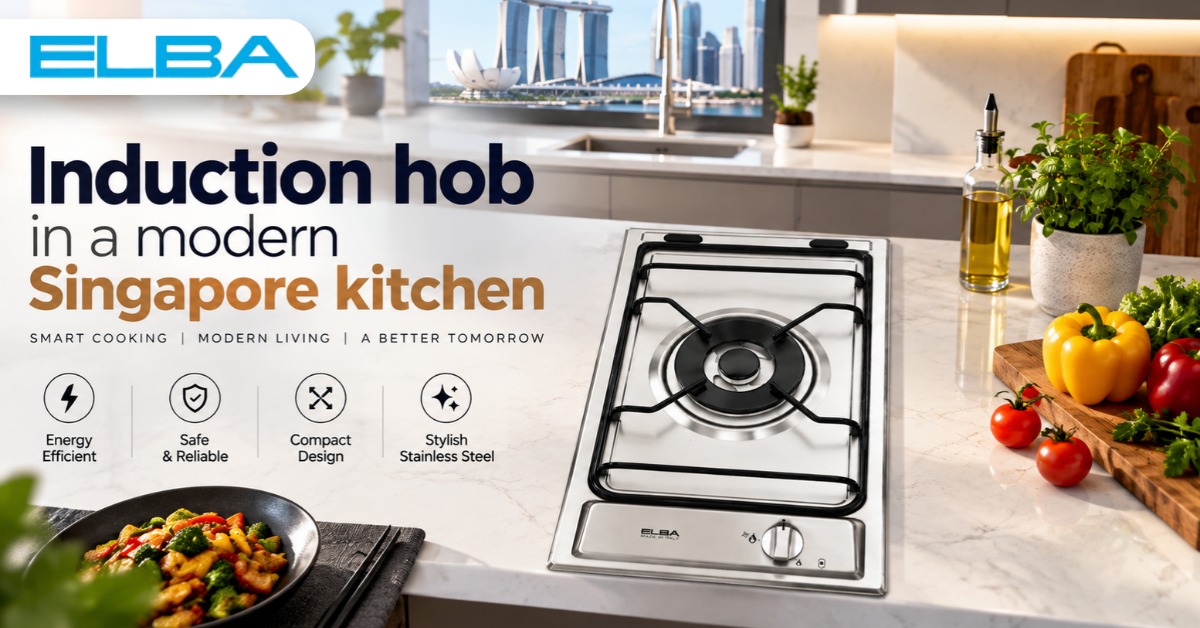
Singapore kitchens are compact, warm and busy, which is exactly why more homeowners are switching to induction cooking. An induction hob heats your pan directly, keeps the kitchen cooler and wipes clean in seconds — a practical upgrade for HDB flats, condos and landed homes alike.
But not every model suits every home. Zone count, wattage, cut-out size, electrical supply and cookware all decide whether the hob you buy will serve you well for the next ten years. This guide walks you through each factor so you can pick an induction hob Singapore kitchens are genuinely built for, without paying for features you will never use.
What Is an Induction Hob and How Does It Work?
An induction hob has copper coils beneath a smooth glass-ceramic surface. When you switch on a cooking zone, the coil creates an electromagnetic field that generates heat directly inside a magnetic pan. The glass itself is not the heat source — it only warms up from contact with the hot pot.
Because energy goes straight into the cookware rather than into the surrounding air, induction heats faster than gas or ceramic, responds instantly when you adjust the power and wastes far less energy along the way.
Why Induction Hobs Suit Singapore Homes
A Cooler Kitchen in a Hot Climate
With no open flame and very little heat escaping around the pan, an induction hob keeps the kitchen noticeably more comfortable — a real advantage in Singapore’s year-round humidity, especially in enclosed or open-concept kitchens.
Safer for Children and Elderly Family Members
There is no flame, no gas leak risk and no red-hot element. Most induction hobs will not heat without a compatible pan on the zone, and child locks, residual heat indicators and automatic shut-off add further protection.
Easy to Clean
Spills do not bake onto the cooler glass surface, so a quick wipe with a damp cloth is usually all it takes. There are no pan supports or burner caps to scrub.
Precise, Fast Heat
Induction can bring water to a boil in a fraction of the time a conventional stove needs, and it holds low temperatures steadily — ideal for melting chocolate, simmering soups or keeping porridge from catching.
Gas remains the favourite for high-heat wok frying, and plenty of households still prefer the visible flame. If that describes your cooking, browse the range of gas hob Singapore homes rely on, or consider a hybrid model that combines both technologies on one surface. Ceramic hobs work with any flat-based pan but are slower and less efficient, so most buyers today choose between induction and gas.
How to Choose the Right Induction Hob in Singapore
1. Measure Your Countertop Cut-Out
If you are replacing an existing built-in hob, measure the cut-out width, depth and the countertop thickness before you shop. Hobs of the same width can have different cut-out requirements, and resizing a quartz or granite top adds cost. Most Singapore kitchens take hobs of around 60 cm to 90 cm wide.
2. Check Your Electrical Supply
Induction hobs draw significant power, and many built-in models need a dedicated circuit and isolator switch rather than an ordinary wall socket. Check the rated power of the hob you like and have a licensed electrician confirm that your home’s wiring and circuit breaker can support it. This is especially important in older flats converting from gas to electric.
3. Choose the Number of Cooking Zones
A two-zone hob suits singles, couples and small kitchens. Three zones give a family room to cook rice, soup and a main dish at the same time, while four or more zones suit larger households and keen home cooks who prepare several dishes at once.
4. Compare Power Output and Boost Function
Each zone has its own wattage. A 1,200 W zone handles gentle cooking and small pots, 1,800 W to 2,000 W zones cover everyday frying and boiling, and higher-rated zones or a boost function deliver short bursts of extra power for searing and rapid boiling. Also check the hob’s total power limit, because some models share power between zones when several run at once.
5. Look at Zone Size and Flexible Zones
Match the zone diameters to the pots you use most. A large zone is useful for stockpots and flat-bottomed woks, while flexible or bridge zones let you combine two areas for a griddle or oval pan.
6. Prioritise Safety Features
Look for these features, particularly if you have young children or elderly parents at home:
- Child lock to prevent accidental activation
- Residual heat indicator that shows when the glass is still hot
- Pan detection so a zone only heats when a compatible pan is present
- Automatic shut-off if a zone is left on too long
- Overflow protection that switches off when liquid spills onto the controls
7. Choose Controls That Suit You
Touch-slider controls offer quick, precise adjustments, while individual touch keys are simple and straightforward. A timer for each zone is a helpful extra that lets you step away while rice or stock simmers.
8. Check the Glass Surface
A quality glass-ceramic top resists scratches, stains and thermal shock. Bevelled or framed edges add durability, while frameless designs give a sleek, flush look on modern countertops.
9. Consider a Hybrid Hob
Hybrid hobs pair induction zones with a gas burner, giving you precise electric cooking alongside a real flame for stir-frying. Before committing, compare the options against the best gas hob Singapore models best gas hob singapore models to decide whether a full induction, full gas or hybrid layout fits the way you cook.
10. Look for Reliable Warranty and Local Service
A built-in hob is a long-term purchase. Choose a brand with a clear warranty, spare parts availability and responsive after-sales service in Singapore, so repairs never leave your kitchen out of action for long.
Check Your Cookware Before You Buy
Induction only works with magnetic cookware. The simplest test is to hold a fridge magnet to the base of each pan — if it sticks firmly, the pan will work. Cast iron, enamelled cast iron and most stainless steel pans are compatible, while plain aluminium, copper and glass cookware are not unless they carry an induction-ready base.
Flat, heavy bases give the best results. For stir-frying, a flat-bottomed wok keeps full contact with the glass and heats more evenly than a round-bottomed one.
Installation Tips for Singapore Kitchens
- Leave the ventilation gaps the manufacturer specifies beneath the hob so the electronics can stay cool.
- If an oven sits directly below, confirm that the two appliances are approved for combined installation.
- Keep the hob away from sinks and ensure the cooker hood above is sized to match its width.
- Use a licensed electrician for the power connection, and have gas lines properly capped if you are switching from gas.
How to Care for Your Induction Hob
Wipe the surface after each use once it has cooled, using a soft cloth and a mild cleaner made for glass-ceramic tops. Lift pans instead of sliding them to avoid scratches, keep pan bases clean and dry, and never use abrasive scourers. With this simple routine, your hob will look and perform like new for years.
Why Choose ELBA for Your Kitchen
ELBA offers a range of built-in hobs covering induction, gas and hybrid models, designed with modern Singapore kitchens in mind. Clean glass finishes, practical safety features and local after-sales support make it easy to find a hob that matches both your cooking style and your countertop.
Final Thoughts
The right induction hob is the one that fits your cut-out, your electrical supply, your cookware and the way your household cooks. Measure first, check your power supply, choose the zones and wattage you actually need and prioritise safety and service. Get those basics right, and induction will make everyday cooking faster, cleaner and cooler.
Frequently Asked Questions
Which brand of induction cooker is best in Singapore?
The best brand is one with proven reliability, strong safety features and local service support. ELBA is a strong choice, offering built-in induction hobs designed for Singapore kitchens and backed by after-sales service here.
Which brand of hob is good in Singapore?
Look for a brand with a full range of induction, gas and hybrid hobs, clear warranties and easy access to spare parts. ELBA covers all three hob types, so you can compare options within one trusted brand.
Which brand is best for an induction hob?
Choose a brand that offers precise power control, a durable glass-ceramic top and dependable safety features such as child lock and pan detection. ELBA’s induction hobs combine these with local support.
Is induction cheaper than gas in Singapore?
Induction is far more energy-efficient because heat goes directly into the pan, so less energy is wasted. Actual running costs depend on your electricity and gas tariffs and how often you cook, but induction also keeps the kitchen cooler.
How to choose the right induction hob?
Measure your cut-out, confirm your electrical supply, then choose the number of zones, wattage and safety features that match your cooking. Finally, check the warranty and local service before buying.
What are the best induction hobs in Singapore?
The best induction hobs offer fast boost power, flexible zones, multiple safety features and a scratch-resistant surface, plus reliable after-sales service. ELBA’s built-in induction range is a strong option to shortlist.
How to choose the right induction cooktop?
Decide between a built-in or portable unit, match the size to your counter and household, check the zone wattage and make sure your cookware is magnetic.
Which induction is better, 1200 watt or 1800 watt?
An 1,800 W zone heats faster and handles frying and boiling better, while 1,200 W suits gentle cooking and small pots. Most households benefit from having both on one hob.
Which brand is best for induction hobs?
Choose a brand that balances build quality, energy efficiency, safety and service. ELBA is well suited to Singapore homes, with induction hobs sized for local kitchens.
Which induction is best, 1600 watt or 2000 watt?
A 2,000 W zone boils and sears faster, making it better for heavy daily cooking. A 1,600 W zone is adequate for lighter meals and uses less power at any one time.
What are the disadvantages of induction hobs?
Induction needs magnetic cookware, may require an electrical upgrade and cannot fully recreate the wok hei of a gas flame. Some models also give off a faint hum at high power.
Which stove brand is most reliable in Singapore?
Reliability comes from quality components, a solid warranty and responsive local service. ELBA combines a full hob range with after-sales support in Singapore.
Do chefs prefer induction or gas?
Many professional chefs still favour gas for high-heat wok cooking, but induction is increasingly popular for its precision, speed and cooler kitchens. For home cooks, induction is often the easier everyday choice.